Deep Learning for Computer Vision#
Companion notebooks for the NPTEL course Deep Learning for Computer Vision.
Warning
This website is under active development and is prone to mistakes.
Content is still being written, revised and corrected. Expect errors in the text, the code and the figures. If something looks wrong, it may well be. Please treat the lecture videos and slides as the authoritative source, and report anything you find.
About this book#
The course runs for twelve weeks. Every lecture has a page in this book, and each page carries three things:
the lecture video, embedded and playable in place,
a link to the slide deck for that lecture,
an Open in Colab badge, so the notebook runs in the browser with nothing to install.
Where a notebook has hands-on material, it follows the same shape throughout: What you will learn and Contents up front, a Review of the previous lecture, a Setup cell, the numbered sections, then Key takeaways and Exercises.
Read a page here to follow the derivations and figures, or click Open in Colab at the top of any page to run and edit the code yourself.
Note
The sliders on this site are not interactive. To use them, open the notebook in Colab.
Several notebooks end with an Explore and verify section containing ipywidgets
sliders. A slider needs a running Python kernel behind it, and these pages are static
HTML, so on this website the widgets are frozen at their default values. Every such
section is paired with a static figure sweeping the same parameter, so you can see the
effect here regardless.
To move the sliders yourself, click Open in Colab at the top of the page and run the cells.
Weeks 1 to 9 have full hands-on notebooks. Weeks 10 to 12 currently provide the lecture video and slides for each lecture, with the hands-on material still to be written.
Course outline#
Week 1: Introduction and Overview
Course Introduction and Overview
History (optional)
Image Formation (optional)
Image Representation
Linear Filtering, Correlation, Convolution
Code Walkthroughs
Week 2: Visual Features and Representations
Edge Detection
From Edges to Blobs and Corners
Scale Space, Image Pyramids and Filter Banks
SIFT and Variants
Human Visual System (optional)
Code Walkthroughs
Week 3: Deep Learning Basics
Neural Networks: A Review
Feedforward Neural Networks and Backpropagation
Gradient Descent and Variants
Regularization in Neural Networks
Improving Training of Neural Networks
Code Walkthroughs
Week 4: Convolutional Neural Networks for Image Classification
Convolutional Neural Networks: An Introduction
Backpropagation in CNNs
CNN Architecture for Image Classification
Code Walkthroughs
Week 5: Beyond Basic CNNs: Architectures, Finetuning and Visualization
Evolution of CNN Architectures: VGG, Inception, ResNets
ResNet Variants, MobileNet, EfficientNet
Finetuning CNNs
Visualizing CNNs
Code Walkthroughs
Week 6: CNNs for Object Detection and Segmentation
CNNs for Object Detection: Two-stage Models
CNNs for Object Detection: Single-stage Models
CNNs for Segmentation
Code Walkthroughs
Week 7: Recurrent Neural Networks and their use in Vision
Recurrent Neural Networks: Introduction
Backpropagation in RNNs
LSTMs and GRUs
Video Understanding using CNNs and RNNs
Code Walkthroughs
Week 8: Attention Models and Transformers
Attention in Vision Models: An Introduction
Soft and Hard Attention: Image Captioning
Self-Attention and Transformers
Code Walkthroughs
Week 9: Vision Transformers and Applications
From Transformers to Vision Transformers
Transformers for Detection
Transformers for Segmentation
Code Walkthroughs
Week 10: Deep Generative Models: GANs and VAEs
Deep Generative Models: An Introduction
Generative Adversarial Networks
GAN Hacks and Improvements
Variational Autoencoders and Disentanglement
Code Walkthroughs
Week 11: Deep Generative Models: Diffusion Models
Introduction to Diffusion Models: DDPMs
Classifier and Classifier-Free Diffusion Guidance
Text-conditioned Diffusion Models
Under the Hood: Sampling, Prediction Space, Noise Schedules, Architectures
Code Walkthroughs
Week 12: Vision-Language Models and Recent Developments
Self-Supervised Learning: SimCLR
Contrastive Learning
Vision-Language Models
CLIP, BLIP, BLIP-2
Code Walkthroughs
Course Conclusion
Additional Material: Miscellaneous Advanced Topics (optional)
Applications and Case Studies
Few-shot and Zero-shot Learning
Adversarial Robustness
Pruning and Model Compression
Neural Architecture Search
Recent Developments
From VLMs to MM-LLMs: LLaVA, Video ChatGPT, ChatGPT-4V, Gemini 1.5
DALL-E 1, 2, 3 and Imagen
Instructor#
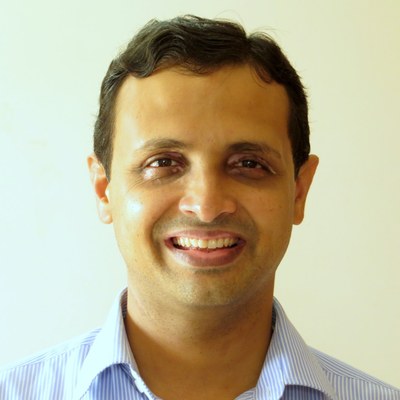
Vineeth N Balasubramanian
Principal Researcher, Microsoft Research India Professor, Computer Science and Engineering, IIT Hyderabad
His broader research interests lie in deep learning, computer vision, multimodality, reasoning and explainable AI. His ongoing work at Microsoft Research focuses on multimodality in foundation models, large reasoning models, machine learning for retrieval in LLMs, and applications to trustworthy and safe AI, human-in-the-loop AI and healthcare. His research has produced over 100 peer-reviewed publications at venues including ICML, NeurIPS, CVPR, ICCV, KDD and AAAI, and he received the Teaching Excellence Award at IIT Hyderabad in 2017.
Teaching Assistants#
Anuj Lalla — Microsoft Research
Rishabh Lalla — MBZUAI (Mohamed bin Zayed University of Artificial Intelligence)